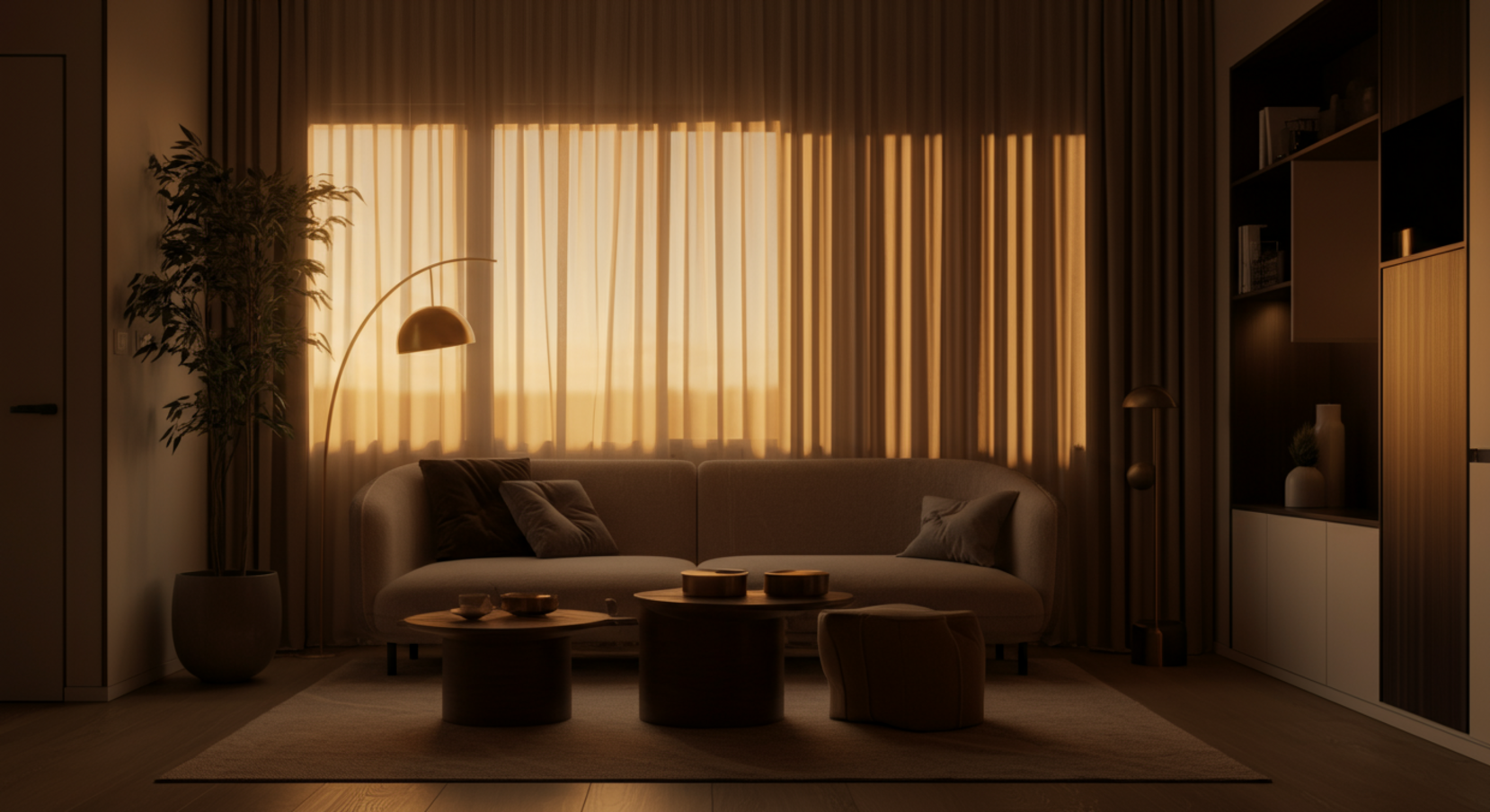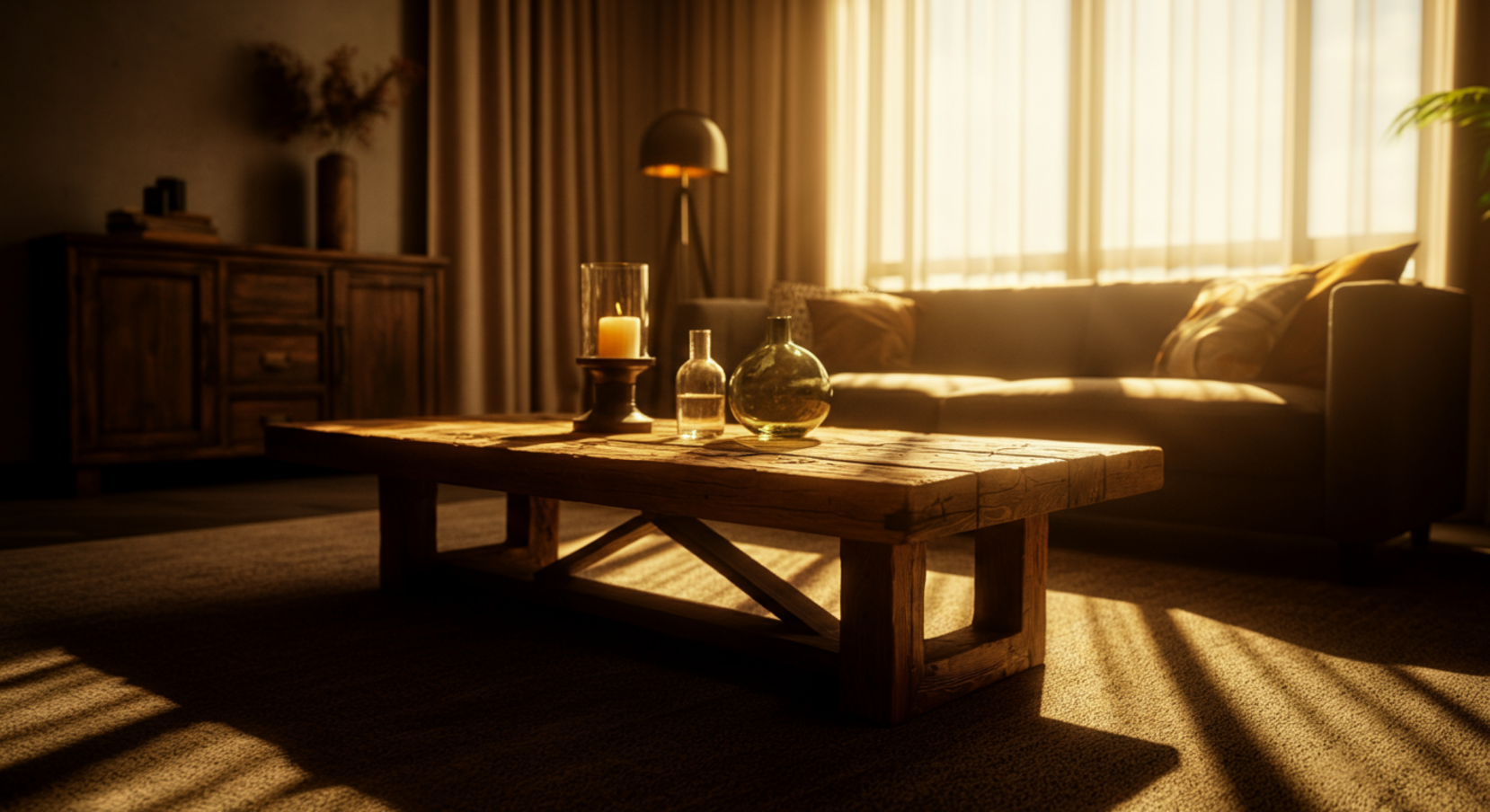
Here is a comprehensive guide to mastering the organic modern aesthetic, written from the perspective of a Senior Interior Designer at Decorescence.
The Art of the Exhale: Mastering Organic Modern Decor
There is a distinct feeling when you walk into a home that truly understands balance. It doesn’t shout for attention, nor does it feel cold or barren. Instead, it invites a deep, physical exhale. This is the essence of organic modern decor.
We are living in an era of sensory overload. Our screens are bright, our schedules are fractured, and the noise of the outside world is constant. It is no surprise, then, that the design world has pivoted hard toward a style that prioritizes serenity, raw tactility, and clean lines.
But let’s be clear: this isn’t just about placing a potted plant next to a white sofa. It is a sophisticated design language that bridges the gap between the crisp minimalism of the mid-20th century and the warm, imperfect beauty of the natural world.
Table of Contents
As designers, we often see clients struggle to find the middle ground between “sleek” and “cozy.” They fear modernism will feel sterile, yet they worry rustic styles will feel cluttered. Organic modern decor is the answer. It is the curated sanctuary. It is the texture of raw linen against smooth marble. It is the silence of negative space and the warmth of blonde wood.
If you are ready to transform your living space into a retreat that feels as good as it looks, you have arrived at the right place. Let’s break down exactly how to build this aesthetic from the ground up.
The Philosophy of Organic Modern Style
To execute a design well, you must first understand its intent. Organic modern decor is not a trend born of an algorithm; it is a response to how we want to live.
Historically, modern design—think Bauhaus or Mid-Century Modern—was about function, industrial materials, and geometry. It was revolutionary, but it often lacked soul. On the other end of the spectrum, bohemian or rustic styles offered warmth but often lacked discipline.
Organic modernism sits right in the center. It borrows the “less is more” discipline from minimalism but rejects the “don’t touch that” fragility. It embraces the Japanese concept of Wabi-Sabi—finding beauty in imperfection—and pairs it with Scandinavian functionality.
The Core Concepts
At its heart, this style relies on three pillars:
1. Biophilia: The innate human instinct to connect with nature. We aren’t just using green colors; we are bringing the outdoors in through materials that breathe.
2. Intentionality: Every item in the room needs a purpose. If it doesn’t serve a function or bring immense aesthetic joy, it goes.
3. Fluidity: The lines in an organic modern room are rarely sharp or jagged. We look for curves, arches, and softness to counteract the rigidity of modern architecture.
Essential Elements of the Look
You cannot build an organic modern space without the right material palette. This is where many DIY designers fail—they focus on the shape of the furniture but ignore the finish.
1. The Raw and The Refined
The magic happens in the contrast. If you have a sleek, polished concrete floor, you need a nubby, high-pile wool rug to soften it. If you have a sharp, architectural coffee table, style it with a jagged piece of coral or a rough ceramic bowl.
Key Materials:
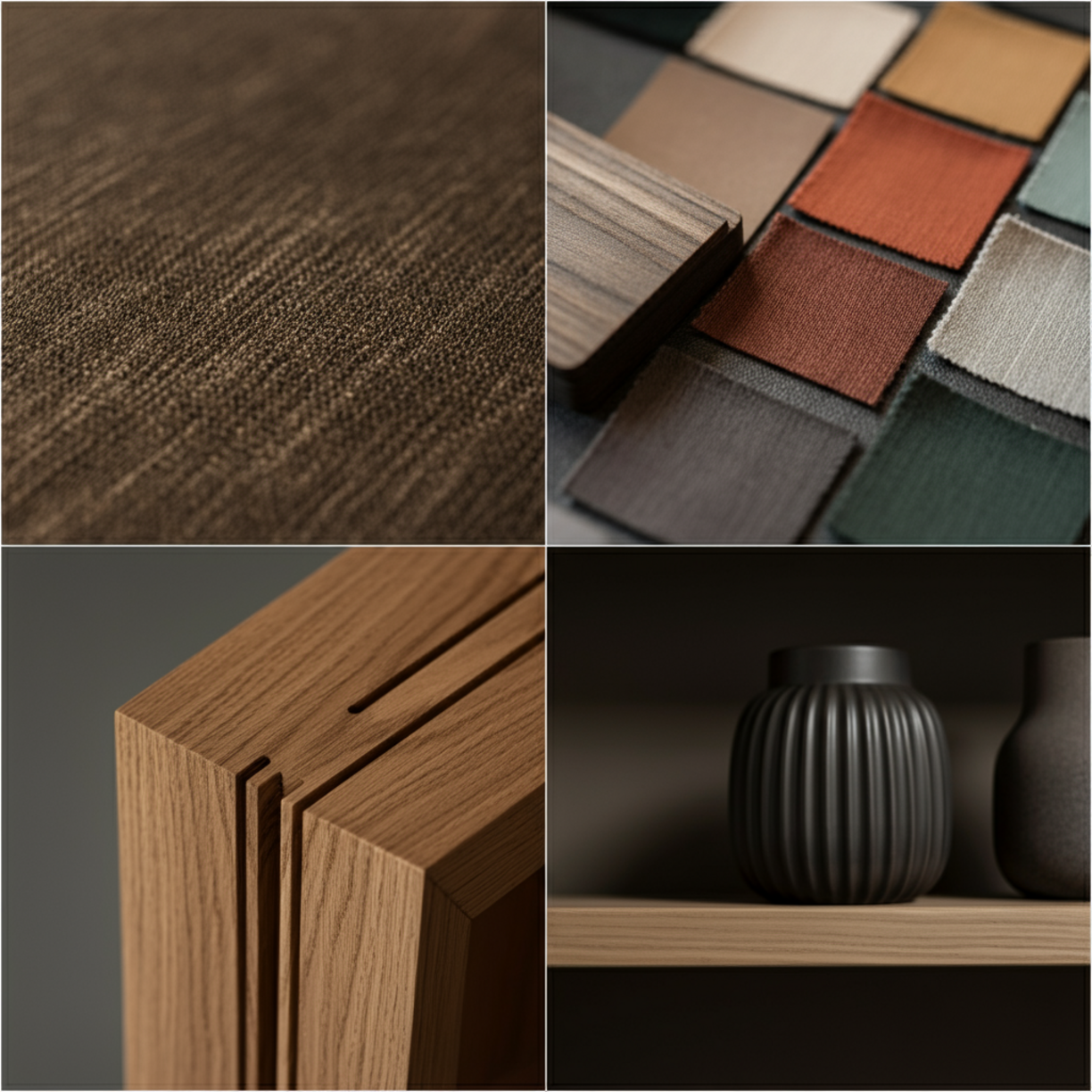
- Woods: Stick to lighter, matte finishes. White oak, ash, walnut, and teak are staples. Avoid high-gloss lacquers or red-toned cherry woods.
- Stone: Travertine is the darling of this style, but limestone, soapstone, and honed marble are equally powerful. You want stone that looks like it was cut from the earth yesterday, not processed in a factory.
- Textiles: Bouclé, linen, raw cotton, jute, and wool. Synthetics have no place here unless they are incredibly high-quality blends.
2. The Palette of the Earth
When we say “neutral,” we do not mean “boring.” A common misconception is that organic modern decor is strictly white and beige.
A sophisticated palette draws from the landscape. Think of the colors of a dried riverbed:
- Warm Whites: Cream, oatmeal, alabaster.
- Earthy Browns: Rust, camel, cocoa, taupe.
- Muted Greens: Sage, olive, eucalyptus.
- Grounding Blacks: Charcoal, slate, soft iron.
3. Sculptural Lighting
Lighting in this aesthetic is treated as art. The fixture should look beautiful even when it is turned off. We often swap standard metal finishes for ceramic bases, paper shades (think Noguchi lanterns), or woven pendants. The light itself should be warm (2700K to 3000K)—never cool blue.
Timeline & Planning
Designing a room with this level of nuance is not a weekend project. I often tell my clients at Decorescence to prepare for a “slow design” process.
Because this style relies heavily on natural materials and unique forms, you cannot simply buy a matching set from a big-box store. That is the antithesis of organic modernism. You need to hunt.
Phase 1: The Purge (Week 1)
You must strip the room back. Remove the clutter, the bright plastics, and the furniture that feels too heavy or ornate.
Phase 2: The Bones (Weeks 2-4)
This is where you address the shell. Painting walls, perhaps applying a lime wash for texture, or refinishing floors.
Phase 3: The Investment Pieces (Weeks 5-10)
Ordering the sofa, the dining table, or the rugs. Custom upholstery takes time.
Phase 4: The Layering (Ongoing)
This is the fun part—sourcing the ceramics, the vintage stool, the perfect branch. This phase never truly ends.
Step-by-Step Styling Guide
Now, let’s get practical. How do you assemble these elements into a cohesive room? Here is the exact roadmap I use when styling a client’s home.
Step 1: Soften the Architecture
Most modern homes are boxes. They have sharp corners and flat ceilings. Your first job is to soften those edges.
- Curtains: Hang floor-to-ceiling drapes in a heavy linen. Run them wall-to-wall if possible to create a soft cocoon.
- Paint: Consider a mineral paint or a lime wash. These paints interact with light differently than standard latex, giving the walls a suede-like texture that feels ancient yet modern.
Step 2: Ground the Room
Start with the rug. In organic modern decor, the rug is the foundation. It should be large—large enough that all furniture legs sit on it.
- Texture: Go for a hand-knotted wool or a chunky jute-wool blend.
- Color: Keep it neutral but textured. An ivory rug with a subtle high-low pile adds depth without screaming for attention.
Step 3: Select Low-Profile Furniture
Modern design favors horizontal lines. Look for sofas that sit lower to the ground.
- The Sofa: A modular, deep-seated sofa in a performance linen or bouclé is ideal. Avoid tufted backs or rolled arms; keep lines clean.
- The Chairs: Contrast the visual weight of the sofa with chairs that have “air” in them—perhaps a wood frame with a cane back or a sculptural sling chair.
Step 4: Introduce Organic Curves
If your sofa is rectangular, your coffee table should not be.
- The Mix: Use a round or kidney-shaped coffee table. Nesting tables made of wood and stone work beautifully here.
- The Flow: Ensure there is a natural flow of traffic. You should be able to move through the room like water—around obstacles, not bumping into sharp corners.
Step 5: Layer Tone-on-Tone
This is the secret to making neutrals interesting. You are not matching colors; you are blending families of color.
- The Technique: If your sofa is oatmeal, add pillows in sand, taupe, and cognac. If your walls are white, choose bedding in cream and bone.
- Visual Interest: The eye should glide over the room, catching on textures rather than jarring color shifts.
Step 6: Bring in the “Living” Element
A room without life feels static. You need greenery, but you must be selective.
- The Tree: One large, sculptural tree (like a Ficus Audrey or a Black Olive) makes a bigger impact than ten small succulents.
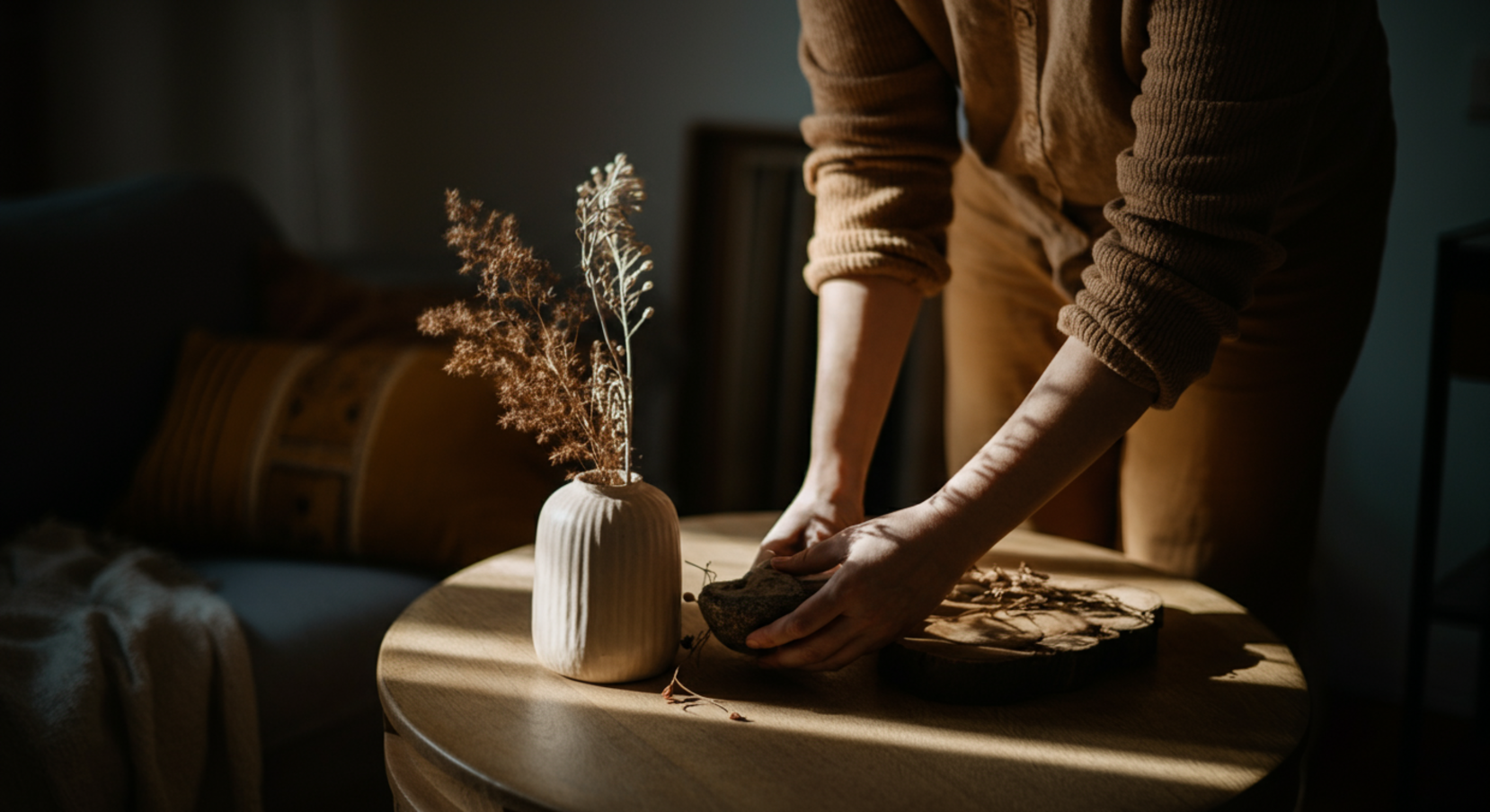
- The Branches: For a more architectural look, place tall, dried branches in a heavy ceramic vessel. This adds height and drama without the maintenance of a live plant.
Step 7: The Imperfect Accessories
Style your surfaces with intention.
- Ceramics: Look for handmade pottery. You want to see the thumbprint of the maker. A vase that is slightly lopsided is better than one that is perfectly symmetrical.
- Wood accents: A vintage wooden stool used as a side table adds instant soul.
- Books: Stack coffee table books (remove the dust jackets for a cleaner look) to create varying heights for your decor.
Step 8: Negative Space
Knowing when to stop is the hardest skill to master. Leave some shelves empty. Leave a corner of the room bare. Negative space allows the eyes to rest and lets the beautiful pieces you did choose truly shine.
Budget Alternatives
Achieving the organic modern decor look can be expensive due to the emphasis on natural materials, but it is not impossible on a budget. You just have to be creative.
1. The DIY Textured Art
Large-scale art is pricey. Create your own by buying a large canvas and applying joint compound (plaster) with a putty knife. Create arches or rough textures, let it dry, and paint it the same color as your wall or a shade darker. It looks like a high-end relief piece for under $50.
2. Thrifting and Upcycling
- Stone Vessels: Check thrift stores for old crocks or vases. Paint them with a mixture of baking soda and paint to give them a terracotta-like texture.
- Furniture Flip: Find a mid-century dresser with good bones. Sand it down to the raw wood and seal it with a matte wax instead of staining it. Swap the hardware for simple matte black or brass knobs.
3. IKEA Hacks
The IKEA Billy bookcase or Besta units are great foundations.
- Add custom doors from companies like Norse Interiors.
- Or, cover the glass doors with cane webbing or burlap for that organic texture.
- Replace standard legs with wooden balls or custom tapered legs.
4. Dried Botanicals
Fresh flowers add up. Forage for tall grasses, branches, or seed pods in your local area (legally, of course). Dried pampas grass, while trendy, is fading out; opt for dried eucalyptus, ruscus, or bare branches for a more timeless look.
Common Mistakes to Avoid
Even seasoned decorators can stumble here. In my years at Decorescence, I have seen many attempts at this style go wrong.
1. The “Beige Box” Syndrome
The Mistake: Using the exact same shade of beige for everything—walls, rug, sofa, pillows.
The Fix: You need contrast. If the walls are light, the wood needs to be medium-toned, or the accents need to be charcoal or rust. Without contrast, the room looks flat and lifeless.
2. Ignoring Scale
The Mistake: Using tiny furniture in a large room, or cluttering a surface with dozens of small trinkets.
The Fix: Go big. One large 9×12 rug is better than a floating 5×7. One massive ceramic bowl on the table is better than a collection of tiny candles. Large scale implies luxury and confidence.
3. Faux Nature
The Mistake: Plastic plants, fake wood laminate, or printed marble textures.
The Fix: Authenticity is key. If you can’t afford a real marble table, get a real wood table. If you can’t keep a plant alive, use dried branches. Never use fake materials; the subconscious mind recognizes them immediately, and the feeling of serenity is broken.
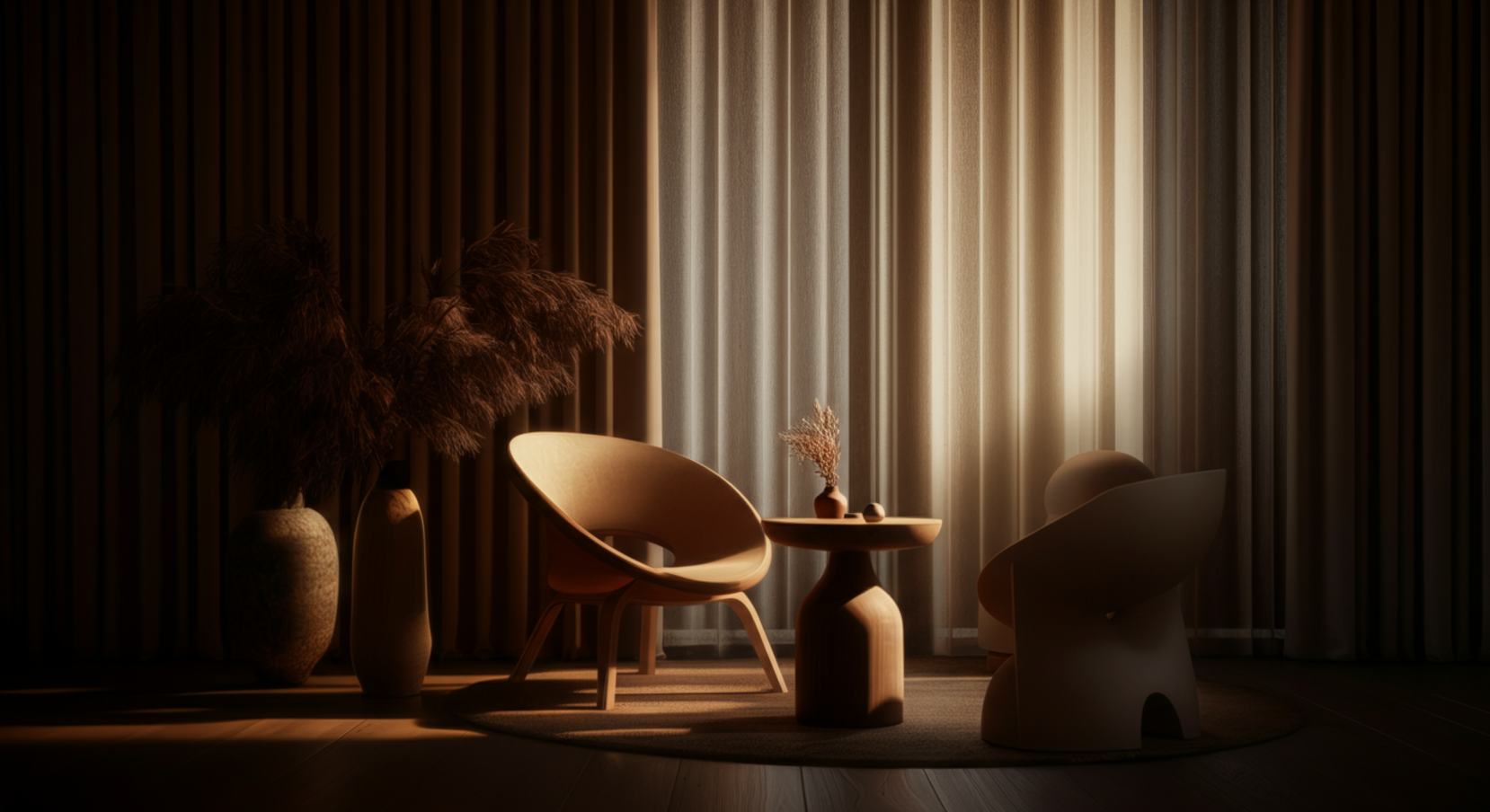
4. Over-Styling
The Mistake: Filling every corner because you are afraid of empty space.
The Fix: If you place an item and it doesn’t feel right, take it away. Live with the empty space for a week. You will likely find that the room feels larger and more breathable without it.
Maintenance and Care
Living with organic modern decor requires a shift in how you care for your home. Natural materials age; they patina. This is part of the beauty, but they need protection.
Unsealed Stone:
Materials like travertine are porous. Use coasters religiously. If you spill wine or coffee, wipe it immediately. You can use a stone sealer, but be aware it might slightly alter the matte finish.
Raw Wood:
Dust regularly with a microfiber cloth. Every 6-12 months, feed the wood with a high-quality beeswax or orange oil to prevent it from drying out and cracking.
Textured Fabrics:
Bouclé and heavy linens can trap dust. Vacuum your upholstery with a soft brush attachment weekly. If you have pets, this style can be tricky—opt for removable, washable slipcovers in heavy canvas or performance fabrics that mimic the look of natural linen.
Wool Rugs:
New wool rugs shed. This is normal. Vacuum often, but turn the beater bar off to avoid damaging the fibers. Rotate the rug every six months so it wears evenly in sunlight.
Conclusion
Embracing organic modern decor is about more than following a trend. It is a commitment to a way of living that values quality over quantity, nature over synthetics, and peace over noise.
It allows your home to tell a story—not a loud, chaotic story, but a quiet, confident one. It creates a backdrop for your life that is supportive and grounding. When you strip away the excess and focus on the tactile relationship between raw earth and modern design, you create a space that is truly timeless.
Start slowly. Buy the best quality you can afford. Let the room evolve. And remember, the goal is not a showroom; the goal is a sanctuary.
Frequently Asked Questions
1. Is organic modern decor expensive?
It can be, due to the focus on solid wood and stone. However, by mixing high-end investment pieces (like a sofa) with vintage finds and budget-friendly textiles, you can achieve the look at various price points.
2. Can this style work with kids and pets?
Yes, but you must be strategic. Choose performance fabrics that look like linen but resist stains. Avoid sharp-edged glass tables. Darker, textured rugs hide dirt better than cream ones.
3. What is the difference between Boho and Organic Modern?
Boho is maximalist, colorful, and pattern-heavy. Organic Modern is minimalist, neutral, and focuses on form and material rather than pattern. Organic Modern is more disciplined and less cluttered.
4. Can I mix metals in this style?
Absolutely. In fact, we encourage it. Mixing unlacquered brass with matte black iron adds depth and prevents the room from looking like a catalog.
5. How do I add color without breaking the style?
Look to nature. Deep forest greens, burnt orange, terracotta, and ocean blues work beautifully as accents. Use these colors in throw pillows, art, or a single accent chair, keeping the main shell of the room neutral.