Here is a comprehensive guide to designing an organic modern apartment, written from the perspective of a Senior Interior Designer at Decorescence.
*
The Ultimate Guide to Designing an Organic Modern Apartment
There is a specific feeling you get when you walk into a home that truly breathes. It isn’t just about how it looks; it is about how the space holds you.
In the heart of a bustling city, our living spaces often feel like temporary pods rather than restorative sanctuaries. We deal with sharp angles, cold concrete, and the visual noise of urban life. This is precisely why the organic modern apartment has shifted from a fleeting Pinterest trend to a fundamental design movement.
It is the antidote to the sterile. It is the marriage of modern minimalism’s clean lines with nature’s raw, imperfect beauty.
Table of Contents
As a designer, I see clients constantly chasing this aesthetic because it promises something money can’t usually buy: calm. It is about creating a home that feels cultivated over time, grounded in earthiness, yet functional enough for 21st-century living.
If you are looking to transform your flat into a haven of tactile luxury and quiet sophistication, you have arrived at the right place. We are going to explore exactly how to execute this look with precision, patience, and a bit of soul.
The Philosophy of Organic Modernism
To execute this style well, you have to understand its lineage. It is not just about buying a beige sofa.
The organic modern apartment is born from a dialogue between three distinct design ancestors: Mid-Century Modernism, Scandinavian functionality, and the Japanese concept of Wabi-Sabi.
Mid-Century Modernism gave us the silhouette. It taught us that form should follow function and that architecture should frame the outdoors. Scandinavian design contributed the obsession with light, neutral palettes, and cozy textures (hygge).
But the secret sauce? That comes from Wabi-Sabi.
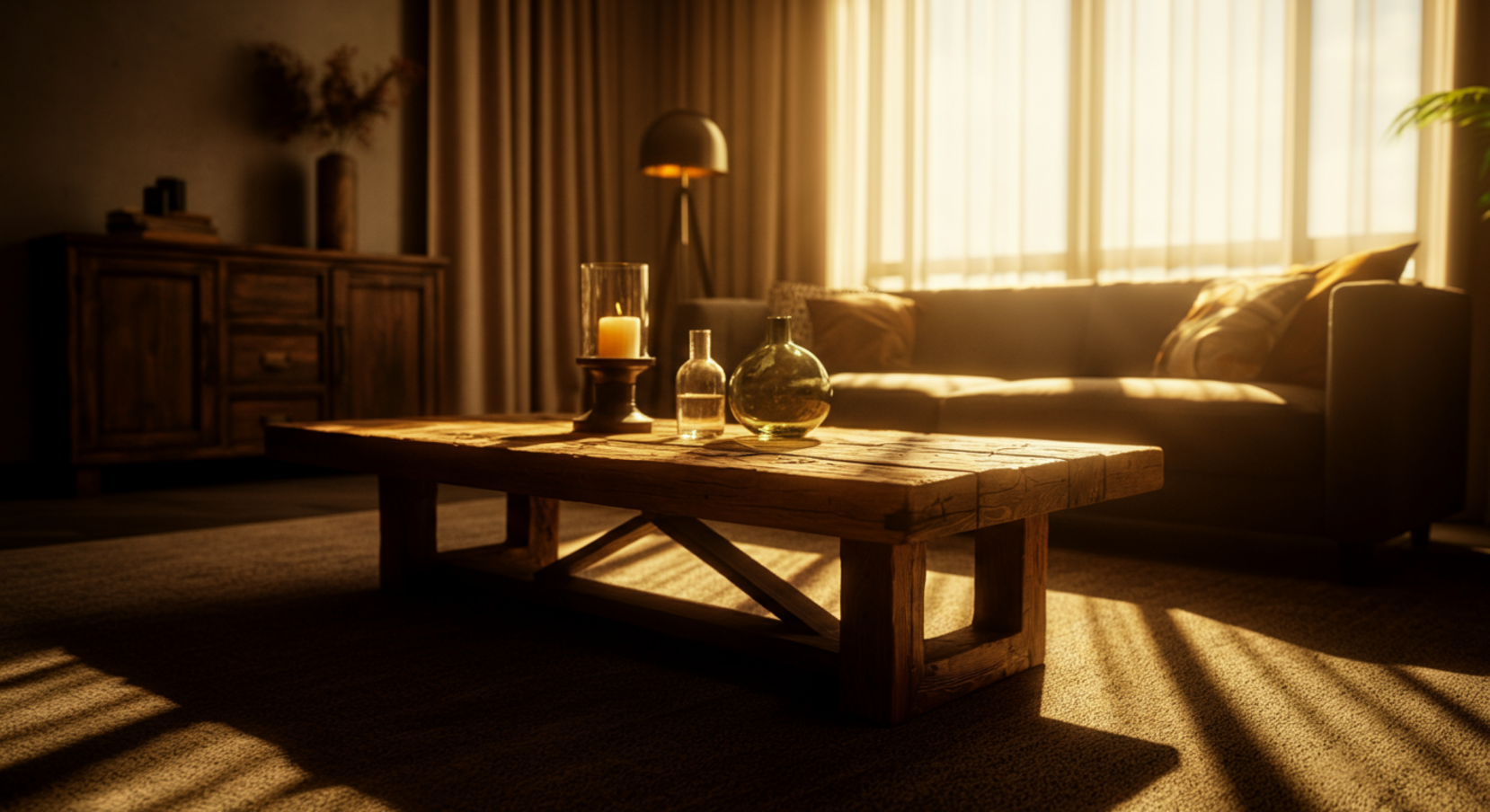
Wabi-Sabi is the appreciation of the imperfect, the impermanent, and the incomplete. In an apartment setting, this philosophy is crucial. It gives you permission to have a coffee table with a raw, live edge. It celebrates the wrinkle in the linen duvet. It prefers a handmade ceramic vase with a slightly crooked neck over a mass-produced, symmetrical one.
The Core Concept: Contrast
The entire aesthetic relies on high-contrast textures rather than high-contrast colors.
We are balancing the “Modern” (sleek, straight, curated, minimal) with the “Organic” (rough, curved, wild, raw). If you lean too far into the modern, the apartment feels like a showroom. Lean too far into the organic, and it feels like a bohemian clutter-fest.
Your goal is the sweet spot in the middle.
Essential Elements of an Organic Modern Apartment
When I source for a client, I am looking for materials that tell a story. In a smaller footprint like an apartment, every piece has to pull its weight.
1. The Raw Materials
Plastic and high-gloss synthetics are generally the enemy here. We want materials that age gracefully.
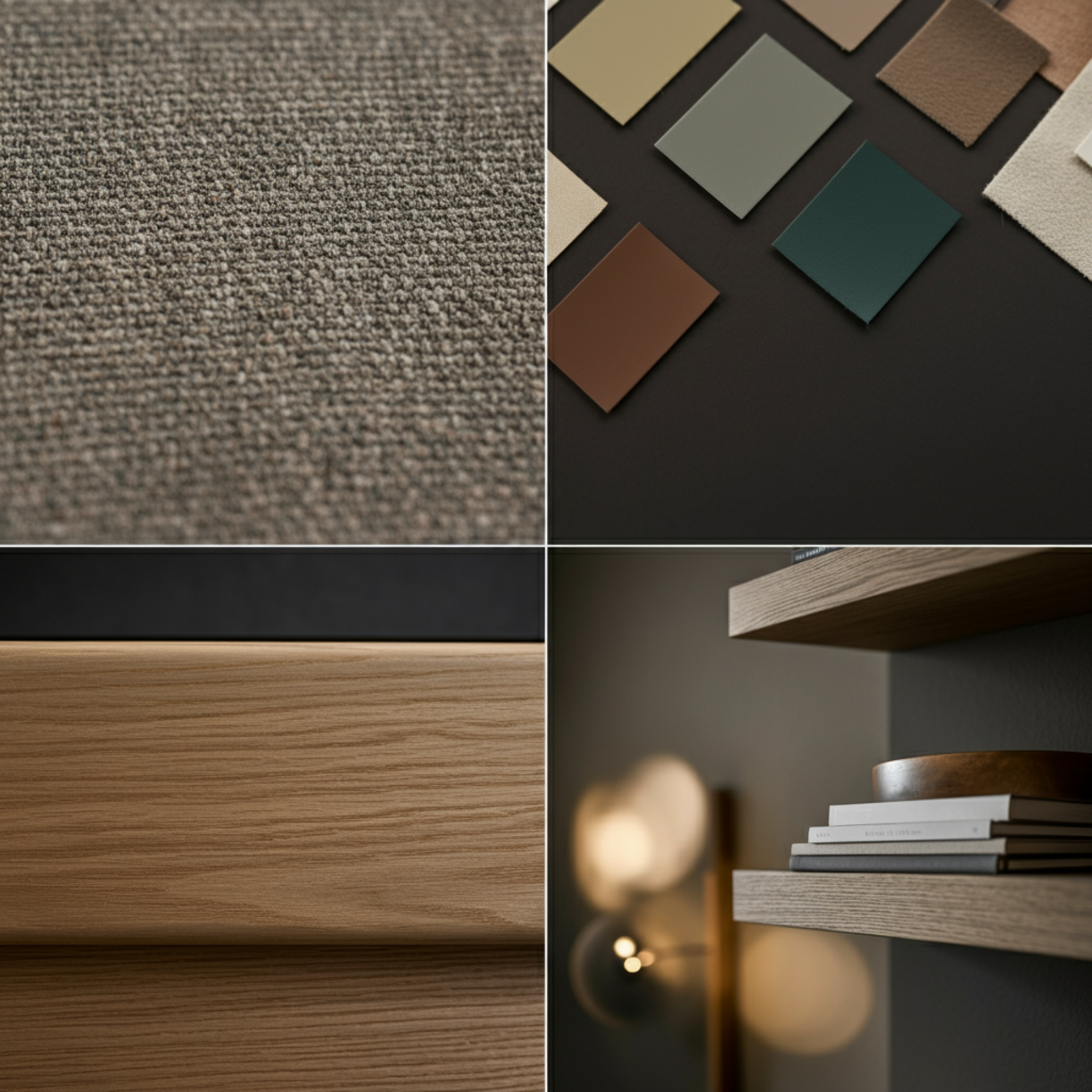
- Woods: White oak, walnut, and ash. We want matte finishes, not shiny varnish.
- Stone: Travertine is the king of organic modernism. Its porous, beige texture is perfect. Limestone and unpolished marble also work beautifully.
- Metals: Brass that patinas over time, or matte black iron to ground the space.
2. The Textural Palette
Since we aren’t using loud colors, texture is your main tool for creating visual interest.
- Bouclé: The nubby, looped yarn fabric that softens hard edges.
- Linen: For curtains and bedding. It filters light in a way that feels ethereal.
- Jute and Sisal: Rugs that bring a rough, earthy grit to the floor.
- Limewash: Paint with texture. It adds depth and movement to flat drywall.
3. The Shapes
Nature rarely produces a straight line. To soften the boxy architecture of a standard apartment, we introduce curves.
- Furniture: Kidney-bean shaped sofas, round coffee tables, and arched mirrors.
- Architecture: If you can’t renovate to add arches, paint an arch on the wall or use an arched cabinet.
4. The Lighting Profile
Lighting in an organic modern apartment should never be harsh. We avoid the “big light” on the ceiling. Instead, we look for:
- Paper lanterns (Noguchi style).
- Ceramic table lamps with textured shades.
- Warm bulbs (2700K temperature) to mimic candlelight.
Timeline & Planning
I always tell my clients: “Fast furniture creates a fast home.” If you want the depth associated with the organic modern look, you cannot buy the entire room in one weekend at a big-box store.
Designing an authentic organic modern apartment is a slow burn. It requires curation.
Phase 1: The Envelope (Weeks 1-2)
This is where you address the shell. Painting walls, changing light fixtures, and assessing flooring. If you have standard rental beige carpet, you plan your rug strategy here.
Phase 2: The Anchors (Weeks 3-8)
Ordering the sofa, the bed frame, and the dining table. These are your investment pieces. In this style, these pieces are often custom or require lead times because we are prioritizing solid woods and specific fabrics.
Phase 3: The Layering (Month 3+)
This is the never-ending phase. It involves finding that perfect vintage vessel, the right branch for the corner, and the art that speaks to the palette.
Step-by-Step Styling Guide
Let’s break this down into actionable steps. Imagine we are walking through your apartment right now. Here is how we build the look.
Step 1: Neutralize the Base
We need a clean slate. White walls are fine, but they can be stark.
- The Pro Move: Opt for “greige” (grey-beige) or warm whites. Colors like Benjamin Moore’s “Swiss Coffee” or Farrow & Ball’s “School House White” are staples.
- Texture: If you own the apartment, consider a lime wash application. It gives the walls a suede-like effect that immediately makes the space feel expensive and old-world.
Step 2: Grounding with Rugs
In an apartment, the floor is a massive surface area. If you have cold laminate or tile, cover it.
- The Strategy: Go big. A rug that is too small makes the room look cheap.
- Layering: Start with a large jute or sisal rug as your base. Then, layer a smaller, softer vintage wool or irregular-shaped hide rug on top. This creates instant dimension.
Step 3: The Curvy Anchor
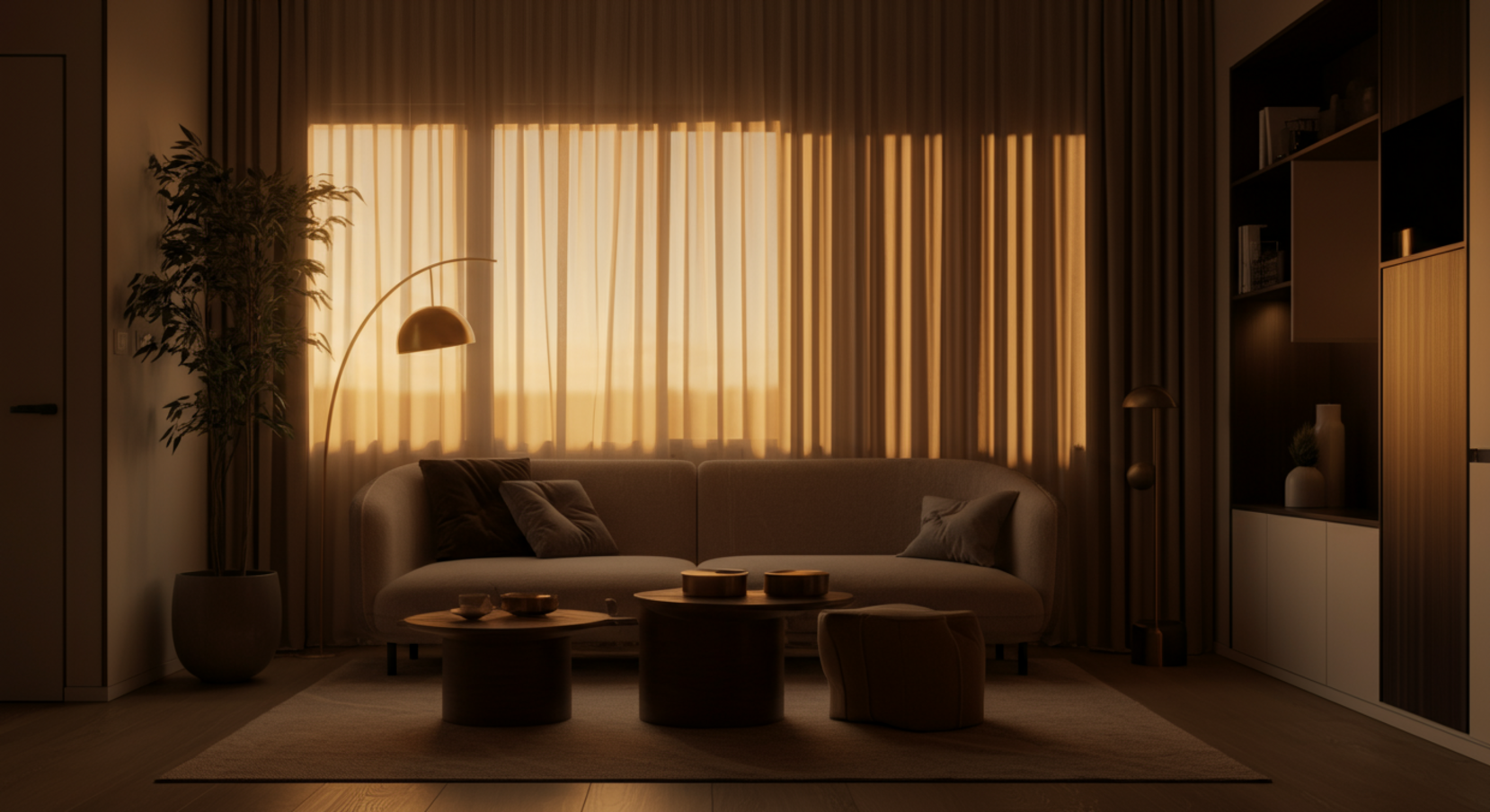
Your sofa is likely the largest object in the room. In organic modern apartment design, we want to move away from rigid sectionals.
- Look for sofas with low profiles and deep seats.
- Rounded arms or a curved back help disrupt the rectangular geometry of the room.
- Fabric choice: A heavy weave linen or a performance velvet in oatmeal or rust.
Step 4: The Wood Tone Mix
A common amateur mistake is trying to match all the wood tones perfectly. That looks manufactured.
- Mix confidently: You can mix walnut and oak. The trick is the undertone. Keep them all warm, or all cool.
- The Finish: Ensure the finishes are similar (e.g., all matte/waxed). A glossy cherry wood table will clash with a raw oak chair.
Step 5: Sculptural Greenery
Plants are non-negotiable, but we aren’t creating a jungle. We want sculptural biology.
- Instead of ten small potted plants, buy one massive tree. A Ficus Audrey or an Olive Tree (if you have the light) creates a focal point.
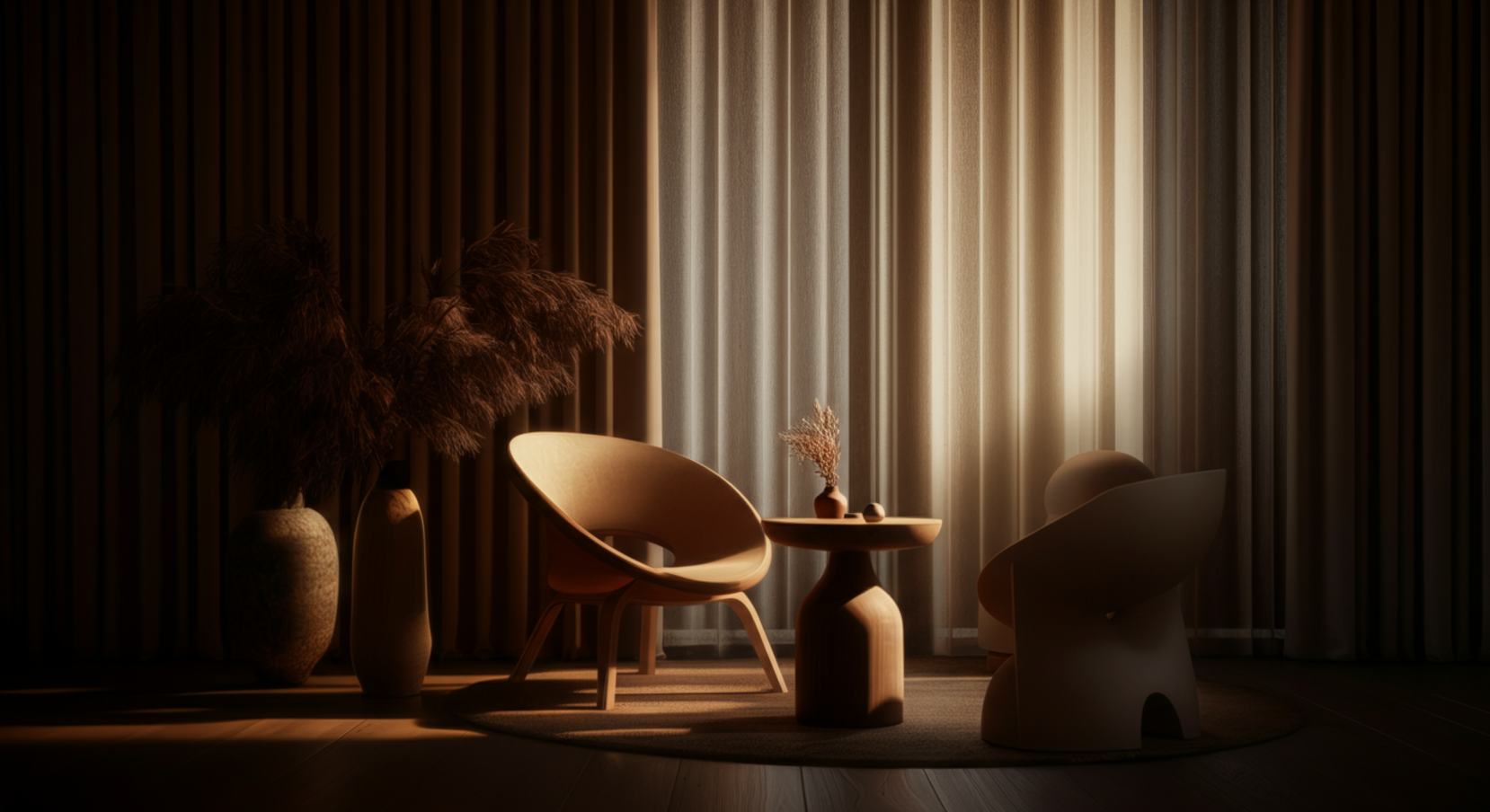
- Dried Florals: For corners with low light, use oversized dried branches or pampas grass in a heavy floor vase. This adds verticality and organic texture without the maintenance.
Step 6: Stone Statements
Introduce stone to add weight and history.
- Coffee Tables: A travertine coffee table is a classic hallmark of this style.
- Decor: If a table is out of budget, use marble coasters, a stone fruit bowl, or heavy bookends. The cold touch of stone contrasts beautifully with the warmth of your wood and textiles.
Step 7: Intentional Negative Space
This style breathes. You do not need to fill every corner.
- Leave a wall blank.
- Let the sunlight hit a patch of floor.
Negative space allows the eye to rest and highlights the few beautiful pieces you *do have.
Budget Alternatives
Achieving the organic modern apartment look can be expensive due to the reliance on natural materials. However, style is about creativity, not just budget. Here is how to cheat the look.
The “Trash to Terracotta” Hack
You know those cheap, glass vases you find at thrift stores?
- The Hack: Mix acrylic paint (in beige, terracotta, or white) with baking powder.
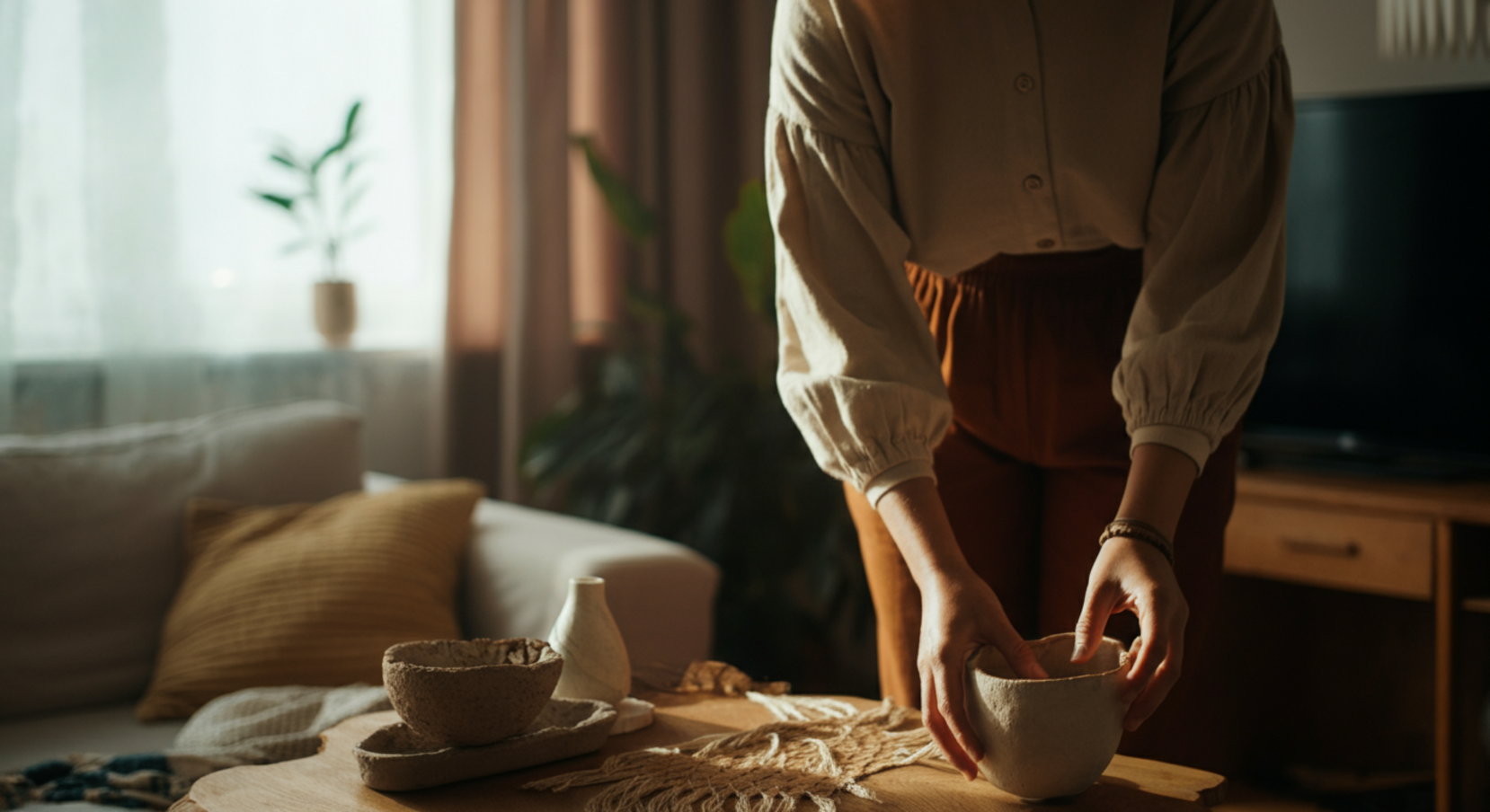
- The Result: Paint the glass vase. As it dries, the baking powder creates a gritty, ceramic-like texture. It looks exactly like expensive earthenware for $5.
IKEA Hacks
IKEA furniture is often too boxy, but it is a great skeleton.
- The Besta Unit: Buy the frame, but source custom doors from companies like Norse Interiors or Superfront that offer textured or wood-slatted fronts.
- Hardware: Swap out standard knobs for stone or unlacquered brass pulls.
Thrifting Wood
Real solid wood is expensive new.
- Scour Facebook Marketplace for “dated” furniture. Look for good shapes—sturdy legs, solid construction.
- Ignore the orange varnish. You can strip that off.
- The Process: Sand it down to the raw wood. Seal it with a clear matte wax. You will reveal the beautiful natural grain hidden under decades of bad varnish.
Gallery Walls vs. Large Art
Large canvas art is pricey.
- Alternative: Use a large piece of textured fabric (like a vintage linen tablecloth or a rug) and frame it.
- Or, use spackle on a blank canvas to create a textured, white-on-white relief painting. It adds depth without adding visual noise.
Common Mistakes
Even with the best intentions, I see people miss the mark. Here is how to troubleshoot your design.
1. The “Beige Box” Syndrome
The Mistake: Everything is the same shade of cream. The walls, the rug, the sofa, the pillows.
The Fix: You need contrast. Add a charcoal throw pillow. Bring in dark walnut wood. Add a black iron lamp. You need darker tones to anchor the light ones, otherwise, the room feels like it is floating away.
2. Buying “Faux” Too Cheaply
The Mistake: Fake wood laminate that looks like plastic, or faux plants that are shiny and neon green.
The Fix: If you can’t afford real wood, choose a painted finish instead of a fake wood print. If you can’t keep a plant alive, use dried branches rather than plastic ferns. Authenticity is key to the “organic” feel.
3. Over-Accessorizing
The Mistake: Filling every shelf with “organic” trinkets until it looks cluttered.
The Fix: Edit, edit, edit. Group items in threes. Leave space around objects. If you have to move five things to set down a drink, you have too much stuff.
4. Ignoring Scale
The Mistake: Putting a tiny rug in a big room, or a massive sofa in a small studio.
The Fix: Measure twice. In an apartment, scale is everything. Low-profile furniture makes ceilings look higher. Large rugs make rooms look wider.
Maintenance
Living in an organic modern apartment requires a shift in how you care for your home. Natural materials are alive; they react to their environment.
Caring for Unfinished Wood
Since we prefer matte, oiled woods over varnished ones, you need to be careful with water rings.
- Routine: Dust with a dry microfiber cloth.
- Treatment: Re-oil your tables every 6-12 months to keep the wood hydrated and repellant to stains.
Stone Care
Travertine and limestone are porous.
- Spills: Wipe up wine or coffee immediately. Acidic liquids (lemon, vinegar) can etch the stone.
- Sealing: Ensure your stone pieces are sealed with a matte stone sealer upon purchase.
Textile Maintenance
Bouclé and linen love to trap dust.
- Vacuuming: Vacuum your upholstery regularly with a soft brush attachment.
- Fluffing: Because these materials are soft, they can look slouchy. Fluff pillows and rotate seat cushions weekly to maintain the structure.
The “Lived-In” Look
The beauty of this style is that it embraces wear. A scratch on the leather chair or a fray on the linen edge isn’t a disaster; it’s character. Relax into it.
Conclusion
Designing an organic modern apartment is essentially a practice in mindfulness. It is about choosing quality over quantity, silence over noise, and nature over the synthetic.
It transforms your apartment from a mere storage unit for your life into a space that actively recharges you. It is sophisticated, yes, but more importantly, it is human.
Start with the walls. Buy that one beautiful lamp. Sand down that thrifted table. Slowly, piece by piece, you will build a sanctuary that feels like a deep exhale at the end of a long day.
*
Frequently Asked Questions
1. Can I do organic modern in a small studio apartment?
Absolutely. In fact, it works best in small spaces because the neutral palette reflects light, making the room feel larger. Stick to low-profile furniture to maximize vertical space and use mirrors to bounce light.
2. Is organic modern kid-friendly?
It can be. While white linen sofas are risky, leather and darker textured fabrics hide stains well. Round edges on coffee tables are actually safer for toddlers than sharp corners. Just opt for washable rug materials or high-performance fabrics.
3. Can I add color to an organic modern apartment?
Yes, but keep it earthy. Think olive greens, terracottas, deep navies, or mustard yellows. Avoid neon or primary colors. Use these colors in textiles (pillows, throws) rather than permanent fixtures.
4. What if my apartment has dark flooring?
Dark floors can actually look stunning in this style. They provide a moody contrast. Just ensure you layer large, light-colored rugs (like oatmeal wool or jute) to brighten the space and create that separation between the dark floor and your furniture.
5. How do I mix metals in this style?
Stick to warm metals like unlacquered brass or brushed gold, mixed with matte black. Avoid shiny chrome or rose gold, as they tend to look too glam or industrial for this aesthetic.